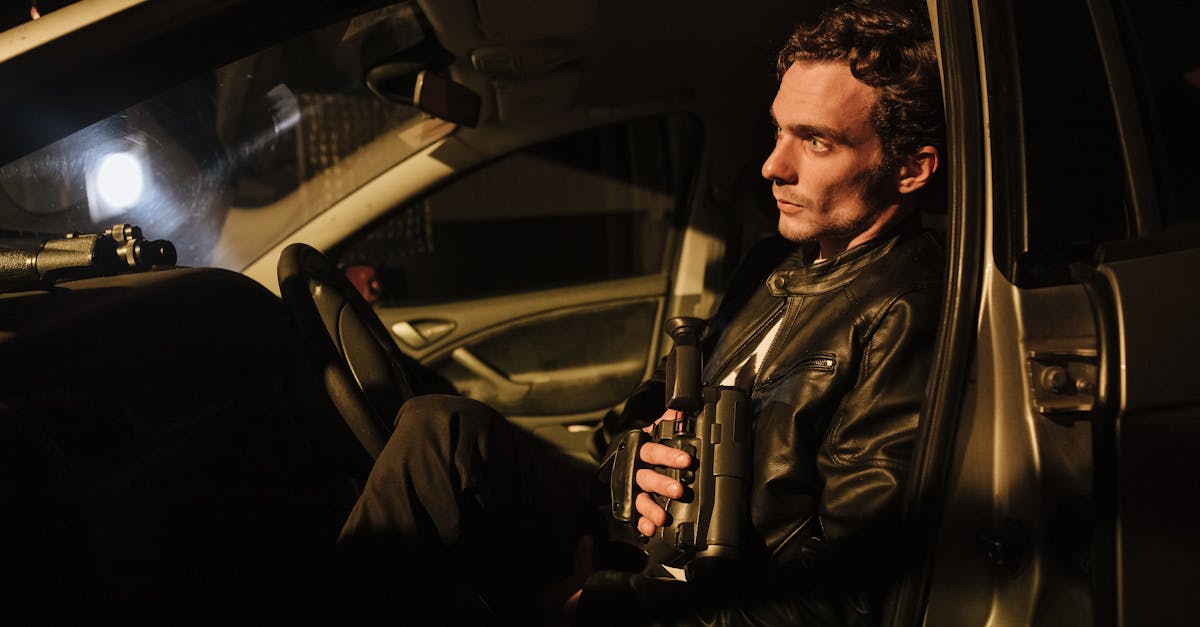
Understanding the Limitations of Covert Surveillance Techniques
Table Of Contents
Risks Associated with Covert Surveillance
The utilisation of covert surveillance techniques carries inherent risks that can undermine ethical standards and individual rights. Privacy violations frequently arise, often leading to feelings of mistrust among the public. People may feel constantly watched, and this perception can stifle free expression. Additionally, the potential for misuse of data collected through surveillance raises significant concerns. Information may be manipulated or used for purposes beyond the original intent, affecting innocent individuals in the process.
Moreover, the impact of poorly implemented surveillance systems can lead to inaccuracies and misinterpretations. Misidentifications and false assumptions based on incomplete data are common pitfalls. Operators may focus on certain demographics, resulting in biased surveillance practices that reinforce societal inequalities. These risks necessitate careful consideration when implementing such techniques, ensuring that safeguards are established to protect civil liberties while attempting to maintain security.
Potential for Misuse and Misinterpretation
Covert surveillance techniques, while designed to enhance safety and security, can easily be taken out of context. The information gathered may lead to misinterpretations, resulting in flawed conclusions about a person's actions or intentions. For instance, a brief glimpse of a behaviour without understanding the broader circumstances may unfairly tarnish someone’s reputation. Such misunderstandings can escalate into significant legal or personal ramifications, magnifying the importance of responsible use and interpretation of surveillance data.
Furthermore, the potential for misuse looms large when individuals or organisations wield surveillance technologies without adequate training or ethical guidelines. The temptation to exploit acquired footage for personal gain or to settle scores can override intent to protect and serve the community. Inadequate oversight or transparency can foster an environment ripe for harassment or discrimination, further complicating the societal trust in such measures. Addressing these challenges requires an ongoing commitment to ethical standards in surveillance practices.
Limitations in Public and Private Spaces
The effectiveness of covert surveillance techniques can vary significantly depending on the context in which they are employed. In public spaces, factors such as crowded environments and the presence of numerous distractions can make it challenging to capture clear and actionable data. Surveillance cameras may miss critical moments or create gaps in information, limiting their overall utility. This is especially true when individuals engage in behaviours that intentionally avoid detection, complicating the ability to collect consistent evidence for investigative purposes.
In private spaces, legal and ethical considerations further complicate the deployment of covert surveillance. Privacy laws often restrict the use of surveillance equipment, making it difficult to monitor activities without breaching individual rights. While certain industries may implement surveillance for security reasons, the intricacies of consent and expectation of privacy lead to challenges in accountability and transparency. These limitations highlight that even when surveillance is technically feasible, its practical application can be hindered by legal frameworks and societal norms.
Areas Where Surveillance Has Little Effectiveness
Certain environments present significant challenges for effective surveillance, particularly those characterised by transient populations or rapidly changing dynamics. In crowded public spaces such as markets or festivals, there is often a high volume of individuals, making it difficult to monitor specific behaviours or identify potential threats through cameras or other covert methods. The effectiveness of surveillance diminishes as anonymity increases, leading to a reduction in the ability to gather actionable intelligence.
Similarly, areas with a high level of social interaction can complicate the interpretation of surveillance data. For example, in vibrant communities where cultural expressions and casual encounters abound, footage may not capture context or intent. This complexity can result in misunderstandings or misinterpretations of behaviour, leading to inaccurate conclusions. In such settings, the value of covert surveillance is often called into question, as it struggles to provide meaningful insights amid the noise of everyday life.
Impact of Surveillance on Behaviour
The presence of surveillance can significantly alter individual behaviour, prompting changes in how people act in both public and private spaces. This response is often rooted in the awareness of being monitored. Individuals may modify their actions, leading to heightened conformity and compliance in some situations, while others might resist or engage in more cautious behaviour due to perceived scrutiny.
The phenomenon often referred to as the Hawthorne Effect illustrates how awareness of observation can impact performance and behaviour. Studies have shown that when people know they are being watched, they may improve their behaviour to align with perceived expectations. This raises questions about the authenticity of the behaviours exhibited in such environments, suggesting that observed outcomes may not accurately reflect true intentions or natural habits when surveillance is at play.
The Hawthorne Effect and Its Implications
The concept of the Hawthorne Effect reveals how individuals alter their behaviour when they are aware of being observed. This phenomenon can significantly impact the effectiveness of covert surveillance techniques. When people know they might be watched, they often modify their actions to conform to perceived expectations or to present themselves in a more positive light. Such changes can lead to results that reflect the influence of the observation rather than genuine behaviour, complicating the analysis and interpretation of collected data.
In contexts where covert surveillance is employed, the anticipation of being monitored can diminish the reliability of the information gathered. This alteration in behaviour can blur the line between natural conduct and actions influenced by the presence of surveillance. Ultimately, these dynamics raise questions regarding the validity of findings from such surveillance, suggesting that the mere act of monitoring can create an artificial environment that hinders genuine insights into subjects’ behaviours.
FAQS
What are the main risks associated with covert surveillance?
The main risks include potential misuse of collected data, invasion of privacy, and the possibility of misinterpretation of the information gathered, which can lead to wrongful conclusions or actions.
How can covert surveillance techniques be misused?
Covert surveillance techniques can be misused by individuals or organisations for unethical purposes, such as stalking, harassment, or unjustified monitoring of personal activities without consent.
In which public and private spaces is covert surveillance most limited?
Covert surveillance is often limited in areas where people have a reasonable expectation of privacy, such as restrooms, changing rooms, and private residences. Additionally, some public spaces may have legal restrictions on surveillance.
Are there areas where surveillance has little effectiveness?
Yes, surveillance can be less effective in environments with high levels of noise or distraction, such as crowded events, or in situations where individuals are aware they are being watched and alter their behaviour accordingly.
What is the Hawthorne Effect and how does it relate to surveillance?
The Hawthorne Effect refers to the phenomenon where individuals modify their behaviour in response to being observed. This can undermine the effectiveness of surveillance as people may act differently when they know they are being monitored.
Related Links
The Impact of Technology on Covert Surveillance MethodsThe Role of Covert Surveillance in Infidelity Investigations
Covert Surveillance: Balancing Privacy and Investigation Needs
Case Studies: Successful Covert Surveillance Operations in Sydney
Ethical Implications of Covert Surveillance Practices